| Anmol Chemicals is the pioneer manufacturers of Ammonium Chloride, CAS Number 7727-54-0, Pharmaceutical Excipients Fragrance & Flavor chemicals in India. We offer Halal and Kosher Ammonium Chloride made in an ISO9001, ISO22000 (FSSC22000) cGMP and GLP certified facility. Our group has several manufacturing facilities spread across the world, supported by toll manufacturers and representatives in UAE, Europe, Africa, USA, China and has several associated manufacturing facilities spread across India. All the Information on Physics, Chemistry, Applications, Uses and Technology on Manufacture of Ammonium Chloride is in these pages. |
| The unit has the certifications like FDA GMP, ISO 9001, ISO 22000, HACCP, REACH, Kosher & Halal |
 ----------
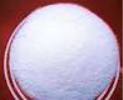
Ammonium Chloride Manufacturers Sal ammoniac
CAS Number: 7646-85-7
Portuguese Fabricantes de cloreto de amônio
English Ammonium Chloride Manufacturers
French Fabricants de chlorure d'ammonium
Spanish Cloruro de amonio Fabricantes
Dutch Fabrikanten van ammoniumchloride
Italy Produttori di cloruro di ammonio
German Hersteller von Ammoniumchlorid
Arabic مصنعي كلوريد الأمونيوم
YOU ARE HERE: Specifications of Ammonium Chloride Manufacturers
Ammonium Chloride FCC AR LR ACS
Ammonium Chloride BP Ph Eur USP IP
Ammonium Chloride SDS GHS, MSDS Sheet
CAS Number: 7646-85-7, EINECS EC Number: 235-186-4, Molecular Weight: 53.5, Chemical Formula: NH4Cl
Ammonium Chloride
Commercial & Pure Crystals, Tablets, Blocks, Pellets Salammoniac
Halal Kosher IP BP Ph. Eur USP ACS AR LR FCC Food Grades
Ammonium Chloride is made in our Automatic Vacuum Evaporated Plant. Grades offered are as under:
GRADES AND SPECIFICATIONS OF COMMERCIAL PURE AMMONIUM CHLORIDE SALAMMONIAC
| CHARACTERISTIC | Pure Pharma & Battery Grade, Anti caking grade & Uncoated grade |
| Dry Basis Assay (NH4Cl) | 99.% min. |
| Moisture | 1% max. |
| Iron | 20 ppm max |
| Sulphate | 0.1% max. |
| Residue on Ignition | 0.5% max |
| pH of 2% Solution | 4.0-5.5 |
| Matter insoluble in water | 0.01% max. |
| Heavy Metals as Pb | 5 ppm max |
| Arsenic | 5 ppm max |
| CHARACTERISTIC | Extra Pure |
| Dry Basis Assay (NH4Cl) | 99.5% min. |
| Moisture | 0.5% max. |
| Iron | 5 ppm max |
| Sulphate | 0.015% max. |
| Residue on Ignition | 0.3% max |
| pH of 2% Solution | 4.0-5.5 |
| Matter insoluble in water | 0.005% max. |
| Heavy Metals as Pb | 1 ppm max. |
| Arsenic | 1 ppm max. |
We offer Ammonium Chloride IP Ammonium Chloride BP Ammonium Chloride USP and Ammonium Chloride Ph Eur from our world class FDA approved, ISO-9001-2008 Certified facility, Anmol Chemicals
Please visit Ammonium Chloride BP Ph Eur USP IP FCC Food Grade ACS AR Analytical reagent Manufacturers
INDIAN PHARMACOPOEIA
AMMONIUM CHLORIDE IP NH4Cl
MOLECULAR WEIGHT: 53.49
| DESCRIPTION | COLORLESS CRYSTALS OR WHITE, CRYSTALLINE POWDER |
| SOLUBILITY | FREELY SOLUBLE IN WATER; SPARINGLY SOLUBLE IN ETHANOL (95%) |
| STANDARD | CONTENT NOT LESS THAN 99.0% AND NOT MORE THAN 100.5% OF NH4Cl CALCULATED WITH REFERENCE TO THE DRIED SUBSTANCE |
| IDENTIFICATION | A10% AMMONIUM CHLORIDE w/w SOLUTION GIVES THE REACTIONS OF AMMONIUM SALTS AND OF CHLORIDES |
| CLARITY AND COLOR OF SOLN. | A 10% w/w AMMONIUM CHLORIDE SOLUTION IS CLEAR & COLORLESS |
| pH | BETWEEN 4.5 AND 6.0, DETERMINED IN A 5.0 W/V SOLUTION |
| ARSENIC | NOT MORE THAN 4 PARTS PER MILLION |
| HEAVY METALS | NOT MORE THAN 10 PARTS PER MILLION |
| MAGNESIUM & ALKALI SALTS | NOT MORE THAN 1% |
| IRON | NOT MORE THAN 20 PARTS PER MILLION |
| SULPHATE | NOT MORE THAN 150 PARTS PER MILLION |
| SULPHATED ASH | NOT MORE THAN 0.1% |
| CALCIUM | NOT MORE THAN 200 PARTS PER MILLION |
| THIOCYANATE | TO PASS THE TEST |
| LOSS ON DRYING | NOT MORE THAN 1%, DETERMINED ON 1 GM BY DRYING IN AN OVEN AT 105°C |
Ammonium Chloride LR Laboratory Reagent
| Test | Specification |
| Description | White Crystalline Powder |
| Identification | Passes NH4 and Cl tests |
| Test Solution (10% w/v in water) | Clear and Colorless |
| Assay as NH4Cl | NLT 99.0% |
| pH (5% w/v in water) | 4.5 to 5.5 |
| Sulphate (SO4) | NMT 0.03% |
| Iron (Fe) | NMT 0.0002% |
| Residue on Ignition (as Sulphates) | NMT 0.3% |
| Calcium (Ca) | NMT 0.04% |
Ammonium Chloride AR Analytical Reagent
| Test | Specification |
| Description | White Crystalline Powder |
| Identification | Passes NH4 and Cl tests |
| Test Solution (20% w/v in water) | Clear and Colorless |
| Assay as NH4Cl | NLT 99.8% |
| pH (5% w/v in water) | 4.5 to 5.5 |
| Nitrate (NO3) | NMT 0.0005% |
| Phosphate (PO4) | NMT 0.0002% |
| Sulphate (SO4) | NMT 0.002% |
| Calcium (Ca) | NMT 0.0005% |
| Copper (Cu) | NMT 0.0002% |
| Iron (Fe) | NMT 0.0002% |
| Lead (Pb) | NMT 0.0001% |
| Magnesium (Mg) | NMT 0.0005% |
| Nickel (Ni) | NMT 0.0001% |
| Potassium (K) | NMT 0.005% |
| Sodium (Na) | NMT 0.005% |
| Zinc (Zn) | NMT 0.0002% |
| Residue on Ignition (as Sulphates) | NMT 0.01% |
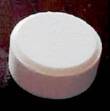
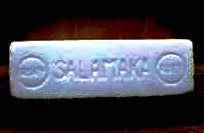
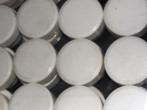
Ammonium Chloride Bars or Bricks of 500gm each & 100gm Tablet.
Ammonium chloride (NH4Cl) Bars or Bricks or Blocks and Tablets & Pellets also Sal Ammoniac, Salmiac, Salmiak, Nushadir Salt, Navsagar, Zalmiak, Sal Armagnac, Sal Armoniac, Salmiakki, Salamaka, Salmiak and Salt Armoniack
Ammonium Chloride – General Information
NH4Cl (also Sal Ammoniac, Salmiac, Salmiak, Nushadir Salt, Navsagar, Navsar, Nausagar, Nausar, Zalmiak, Sal Armagnac, Sal Armoniac, Salmiakki, Salamaka, Salmiak and Salt Armoniack) is, in its pure form, a clear white water-soluble crystalline salt of ammonia. The aqueous ammonium chloride solution is mildly acidic. Sal ammoniac is a name of natural, mineralogical form of Ammonium chloride.
Sources
In nature, the substance occurs in volcanic regions, forming on volcanic rocks near fume-releasing vents. The crystals deposit directly from the gaseous state, and tend to be short-lived, as they dissolve easily in water.
It is prepared commercially by reacting ammonia (NH3) with hydrogen chloride (HCl):
NH3 + HCl → NH4Cl
Ammonium chloride is also available as a bye-product of Soda Ash Plant and some other chemical processes.
It is also found in volcanoes and deep underground.
It sublimes readily but this process involves dissociation into ammonia and hydrochloric acid followed by reforming of the compound.
NH4Cl → NH3 + HCl
Zinc ammonium chloride is commonly known as flux, and is used for galvanizing steel. It is 60% ammonium chloride and 40% zinc chloride in it.
Applications
Ammonium chloride is sold in blocks ( bars or briquettes ) at hardware stores for use in cleaning the tip of a soldering iron and can also be included in solder as flux. A principal use of ammonium chloride has been as a fluxing agent for hot dip galvanizing of steel and in the refining of zinc. It provides fluxing action by reacting with molten zinc to form a stable melt containing zinc chloride and ammonium chloride.
It is used as it is or in compound fertilizer. It has higher concentration of Nitrogen than ammonium sulphate. Nitrification is less rapid than in urea or ammonium sulphate and this means N losses are lower. Although it is better known as rice fertilizer, it has been tested and used on other crops like wheat,barley, sugarcane, maize, fiber crops etc. Of particular note is the use of this fertilizer on palms; increasing the yield of Copra per tree.
Other uses include a feed supplement for cattle, in hair shampoo, in textile printing, in the glue that bonds plywood, as an ingredient in nutritive media for yeast, in cleaning products, and as cough medicine. Its expectorant action is caused by irritating action on the bronchial mucosa. This causes the production of excess respiratory tract fluid which presumably is easier to cough up. It is also used in an oral acid loading test to diagnose distal renal tubular acidosis.
It is used in snow treatment, namely on ski slopes at temperatures above 0°C, to harden the snow and slow its melting.
Found in nature and also produced industrially, it has other important uses too. These include lowering the melting temperatures of certain metals for manufacturing processes, and as a fertilizer, anti-caking agent and ingredient in personal care products and pharmaceuticals.
In several countries Ammonium chloride is used to spice up liquorices-type dark candies (Finland's Salmiakki, Sweden's Lakrisal, the Netherlands' Zoute drop and the Danish Dracula Piller are popular examples), and as a flavouring for vodkas.
Other uses include electrolyte for plating baths and/or batteries; fertilizer, personal care product formulations, pharmaceuticals etc.
Ammonium chloride is used as an expectorant, diuretic and systemic acidifying agent. It is used in the treatment of severe metabolic alkalosis, to maintain the urine at an acid pH in the treatment of some urinary-tract disorders or in forced acid diuresis.
Electroplating Use: These days, there are three primary types of acid zinc plating baths: straight ammonium chloride, straight potassium chloride and mixed NH4Cl/KCl. Acid zinc plating systems have several advantages over alkaline cyanide and alkaline non-cyanide zinc plating systems except that in acid zinc plating, the electrolyte is extremely corrosive.
Ammonium chloride zinc plating: The ammonium chloride bath is the most forgiving of the three major types of acid zinc plating because of its wide operating parameters. The primary drawback of this system is the high level of ammonia, which can cause problems in wastewater treatment. Ammonia acts as a chelator, and if the rinse waters are not segregated from other waste streams, removal of metals to acceptable levels using standard water treatment practices can be difficult and expensive. Ammonia is also regulated in many communities.
Dry Cell or Batteries: Ammonium chloride is a component of dry cell batteries, little storehouses of energy that power so many of our electrical devices. Batteries permit us to use electricity even when we are far from an electrical point. With battery power we can have music while we jog down the street, light while we camp on a moonless night, and the convenience and accuracy of a pocket calculator.
Galvanizing, Soldering and Tinning Fluxes: Ammonium chloride is used in fluxes for galvanizing, soldering and tinning. Its ability to remove oxides and salts from metal surfaces insures good metal to metal bonding. It has the ability to attack metal oxides. This reaction is relevant to the utility of Ammonium chloride as a flux for soldering - it dissolves oxide coatings exposing the clean metal surface.
Health Hazards: For normal industrial uses and with good hygienic practices, there are no known hazards with ammonium chloride. The American Conference of Governmental Industrial Hygienists (ACGIH) recommends an 8-hour TLV®-TWA of 10 mg/m3 ammonium chloride fumes in air to prevent irritation of respiratory passages.
Safety Precautions: Wash thoroughly after handling. The use of impervious or rubber gloves and chemical safety goggles are recommended.
First Aid: In
case of eye contact, immediately flush eyes with plenty of water for at least 15 minutes. Call a physician.
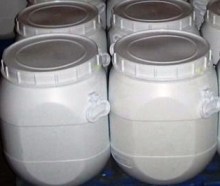
Storage & Handling: Ammonium chloride granular is a dry, crystalline solid and presents no unusual handling problems. It should be stored in a clean, dry place away from strong alkalis or strong oxidants.
For Clinical Pharmacology please check drug.com.
We also supply Aluminum Chloride Anhydrous Hexahydrate, Ammonium Persulfate, Ammonium Carbonate, Ammonium Bicarbonate, Calcium Chloride, Chromium Chloride Hexahydrate, Copper Chloride, Magnesium Chloride Hexahydrate Anhydrous, Potassium Chloride, Sodium Acetate, Zinc Chloride.
Ammonium Chloride IP BP Ph Eur USP Grade FCC Food Grade AR LR ACS Analytical Reagent Grade manufacturers:
Anmol Chemicals
S-8, SARIFA MANSION, 2ND FLANK ROAD, CHINCHBUNDER, MUMBAI 400009, INDIA
TEL: (OFFICE) 91-22- 23774610, 23723564. FAX: 91-22-23728264 Check
e-mail: anmolc@mtnl.net.in
Ammonium bromide -- Aluminium chloride -- Aluminum chloride -- Ammonium sulfate -- Ammonium persulfate -- Barium chloride -- Benzyl Alcohol -- Boric Acid -- Calcium phosphate -- Calcium propionate -- Calcium Oxide -- Calcium Hydroxide -- Calcium Sulfate -- Copper sulfate sulphate -- Calcium saccharate -- Ceric ammonium nitrate -- Chromium Chloride -- Cinnamaldehyde Cinnamic aldehyde -- Cupric chloride -- Gentian Violet -- Magnesium Chloride -- Magnesium Sulfate -- Manganese Chloride -- Manganese Sulfate -- Methylene Blue -- Potassium iodide -- Potassium nitrate Potassium nitrite -- Sodium sulfate -- Mono di ammonium phosphate -- Potassium acetate -- Potassium bromide -- Potassium phosphate monobasic dibasic tribasic -- Sodium Bicarbonate -- Sodium Borate -- Sodium Bromide -- Sodium Diacetate -- Sodium hexametaphosphate -- Sodium Hydroxide Pellets -- Sodium nitrite Sodium nitrate -- Sodium phosphate monobasic dibasic tribasic -- Zinc nitrate – Cream of Tartar - Potassium Bitartrate
Product Links: ---- Sodium Acetate ---- Zinc Chloride ---- Calcium Chloride ---- Potassium Chloride
Exporters to USA, Canada, UAE, Dubai, South Africa, Tanzania, Kenya, Nigeria, Egypt, Uganda, Turkey, Mexico, Brazil, Chile, Argentina Europe Netherlands, Italy, Spain, Germany, Portugal, France, Malaysia, Indonesia, Thailand, Vietnam, Korea, Japan, etc.
Copyright and Usual Disclaimer is Applicable. 04-Jun-2025